Why Startups Fail Isn’t What You Think
Most founders are told the same thing: move fast, break things, fail fast.
It sounds right. It feels right. But it’s incomplete—and often dangerous.
The real reason why startups fail isn’t because they move too slowly. It’s because they move without clarity.
Most early-stage startup mistakes don’t come from bad execution. They come from uninformed execution.
And that leads to a more dangerous outcome than failure: wasted time, false confidence, and scaling the wrong thing.
If you’ve ever wondered why most startups fail before product market fit, the answer is simple:
They’re not failing fast. They’re failing blind.
The Myth of “Fail Fast”
The “fail fast” philosophy was meant to encourage experimentation. But somewhere along the way, it got misinterpreted.
Founders now believe:
- Speed = progress
- Launching = validation
- Building = learning
That’s not true.
Fast failure only works if you’re learning from each iteration.
Otherwise, you’re just accelerating mistakes.
This is where most MVP failure reasons originate. Not from bad ideas—but from untested assumptions disguised as progress.
The Real Problem: Failure Without Visibility
Let’s reframe the question.
It’s not just why startups fail. It’s why founders don’t see it coming.
Most founders don’t realize they’re operating with:
- Incomplete data
- Misleading feedback
- Assumption-heavy decision-making
The real reason startups fail is lack of decision visibility.
You don’t know:
- Which metric matters?
- Whether users truly need your product
- If your growth is real or just noise
And by the time you realize it, you’ve already burned time and capital.
Where Startups Actually Go Wrong (Startup Failure Reasons)
Here’s where things go wrong—consistently across early-stage companies:
1. Building Before Validating
Jumping straight into product development without understanding:
- Real user pain points
- Willingness to pay
- Market demand
This is one of the most common early -stage startup mistakes.
2. Misreading Product-Market Fit
Founders often mistake:
- Engagement for demand
- Interest for intent
Product market fit problems aren’t obvious. They’re subtle and easy to misinterpret.
3. No Clear Startup Execution Strategy
Startups operate without a structured startup decision -making framework.
Decisions become:
- Reactive
- Intuition-driven
- Inconsistent
4. MVPs Built to Impress, Not Test
Instead of focusing on learning, founders focus on:
- Features
- Design
- Completeness
The goal of an MVP isn’t to launch. It’s to validate.
5. Scaling Before Validation
Growth becomes the focus before clarity.
Result:
- Increased burn
- Amplified mistakes
- Harder pivots
Blind Execution vs Intelligent Iteration
There’s a critical difference most founders overlook:
Blind Execution:
- Build → Launch → Hope
- Decisions based on assumptions
- No structured feedback loop
Intelligent Iteration:
- Hypothesis → Test → Learn → Decide
- Clear validation checkpoints
- Data-informed decisions
The difference between fast failure and blind failure is simple: feedback quality.
If your feedback loop is weak, speed only makes things worse.
How to Avoid Startup Blind Spots (A Practical Framework)
If you want to understand how to validate a startup idea and avoid failing blind, here’s a simple framework:
1. Define Assumptions Explicitly
Write down:
- Who is your user?
- What problem are you solving?
- Why will they pay?
If you can’t articulate this clearly, don’t build yet.
2. Validate Before You Build
Before writing code:
- Talk to users
- Test demand with landing pages
- Run small experiments
This is how you validate MVP before scaling.
3. Build to Learn, Not Launch
When thinking about how to build MVP quickly:
- Strip-down features
- Focus on one core hypothesis
- Measure specific outcomes
4. Create a Decision System
Use a simple startup decision -making framework:
- What are we testing?
- What does success look like?
- What will we do based on results?
5. Track the Right Signals
Vanity metrics kill clarity.
Focus on:
- Retention
- Conversion
- Repeat usage
Role of AI and External Expertise in Startup Success
Most founders try to figure everything out themselves.
That’s where things slow down—and go wrong.
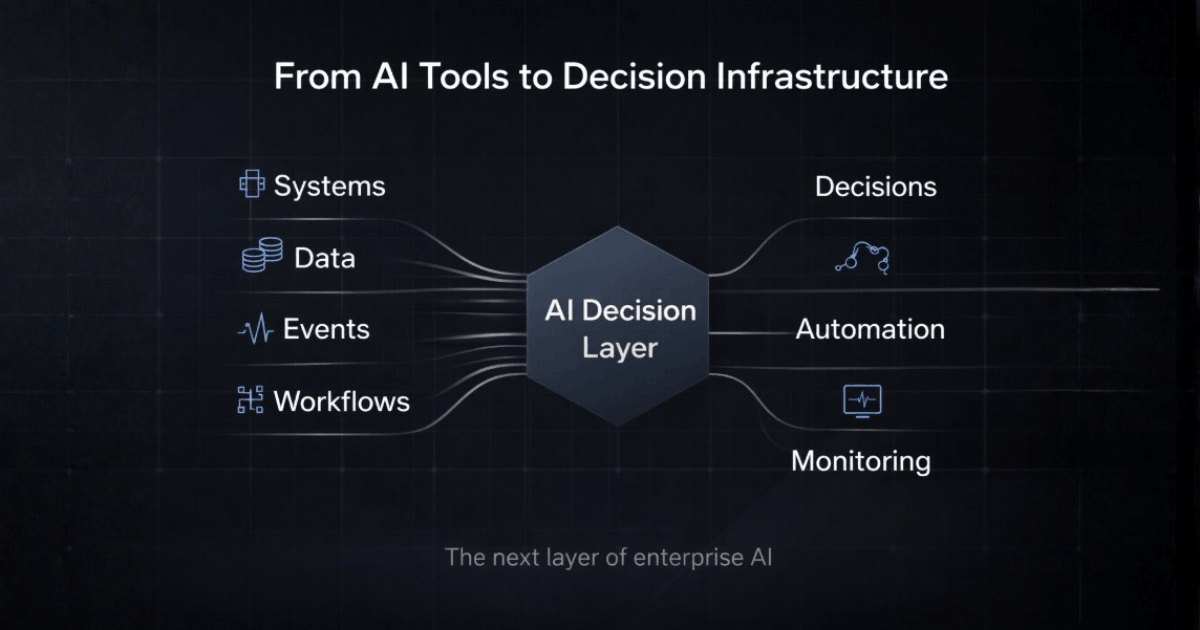
Today, startups don’t just need tools. They need decision infrastructure.
This is where:
- AI support for startup growth
- Startup technology consulting services
- Product development partners for startups
start to play a critical role.
AI as Decision Support (Not Decision Maker)
AI isn’t here to replace founders.
It helps:
- Analyze patterns faster
- Identify blind spots
- Improve decision accuracy
The real leverage is in better decisions—not automation alone.
Why External Expertise Matters
Bringing in:
- Startup tech advisory
- MVP development agencies
- Or even a venture studio for startups
is not about outsourcing.
It’s about:
- Reducing trial-and-error
- Accelerating validation
- Avoiding predictable mistakes
Many founders wait too long to hire AI experts for startup execution—usually after things start breaking.
By then, the cost of correction is much higher.
Conclusion: Startups Don’t Fail Because They Move Fast
Let’s simplify everything.
Startups don’t fail because they:
- Move too fast
- Lack effort
- Don’t build enough
They fail because they build without understanding.
The difference between success and failure isn’t speed.
It’s visibility.
The best founders don’t just execute faster. They see clearer.
And in early-stage startups, clarity is your biggest competitive advantage.
FAQ: Startup Failure, MVPs, and Validation
Why do most startups fail?
Most startups fail due to poor decision-making, lack of validation, and misunderstanding customer needs—not just execution speed.
How do you validate a startup idea?
You validate by testing assumptions early—through user interviews, demand testing, and small experiments before building a full product.
What is the fastest way to build an MVP?
The fastest way is to build only what’s needed to test a core hypothesis—focusing on learning, not features or scale.
When should a startup bring in AI or tech experts?
Startups should involve experts early—during validation and MVP stages—to avoid blind spots, improve decisions, and accelerate execution.