SaaS didn’t eliminate operational complexity - it redistributed it
For more than a decade, founders have been told a simple story:
Adopt the right SaaS stack and your business will scale.
CRM for sales. Helpdesk for support. Accounting software for finance. Marketing platforms for growth.
Individually, these tools work well.
Collectively, they rarely do.
Because operations do not live inside individual tools - they live across them.
And this is where many growing businesses encounter an invisible constraint: as tool stacks expand, operational coordination becomes increasingly manual.
The result is a paradox familiar to many founders.
The business grows. The SaaS stack expands. But operations become harder to manage.
The hidden cost of the modern SaaS stack
Most companies today operate across a fragmented environment of:
- SaaS applications
- spreadsheets
- communication tools
- dashboards and reporting systems
Each tool solves a specific function. But real operations require end-to-end execution across systems.
Consider a common business workflow:
A lead arrives → gets qualified → scheduled → converted → invoiced → serviced → followed up.
This is not a feature inside a single application.
It is a cross-system operational process.
Traditional SaaS platforms were designed around functions - not workflows.
Which means businesses often end up building manual coordination layers between systems:
- copying information between tools
- monitoring dashboards
- triggering follow-ups
- resolving workflow gaps
In other words, software scales - but operations do not.
Why integrations and automation rarely solve the problem
Many organisations attempt to solve fragmentation through:
- integrations
- workflow automation tools
- lightweight AI assistants
These solutions help move data between systems or automate individual steps.
But they rarely run complete operational workflows.
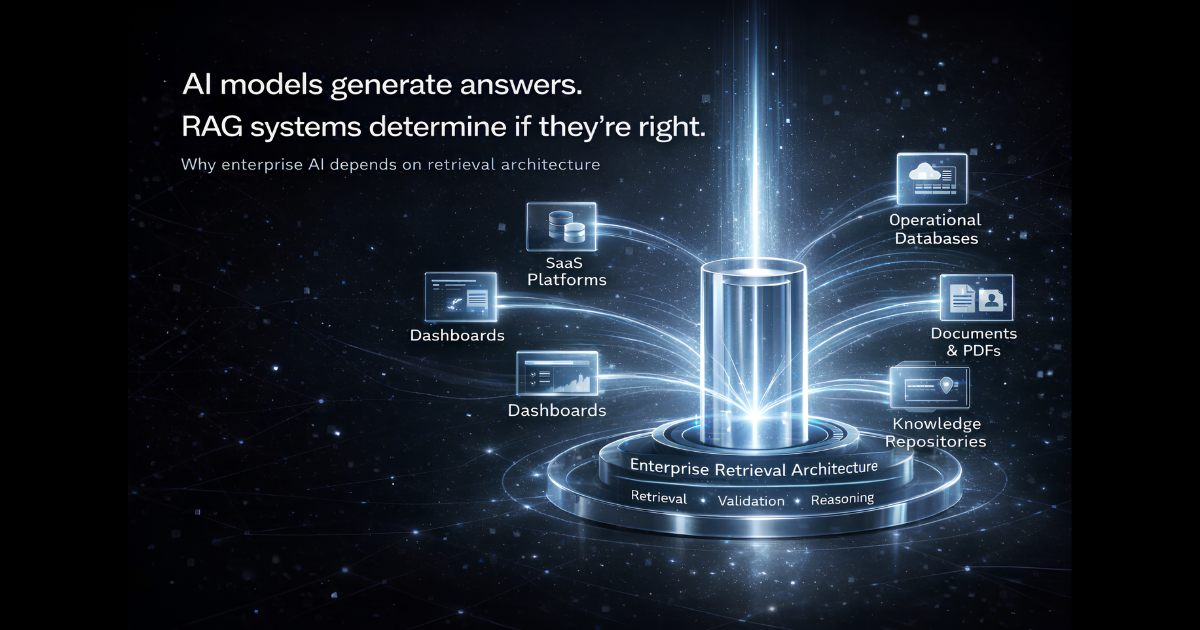
Running operations requires far more than triggers and integrations. It requires systems capable of:
- orchestrating multi-step workflows
- reconciling data across systems
- monitoring execution continuously
- identifying anomalies and resolving exceptions
At that point, the challenge stops being automation.
It becomes operational infrastructure.
The emergence of AI Operations Platforms
This is where a new category of systems is beginning to emerge.
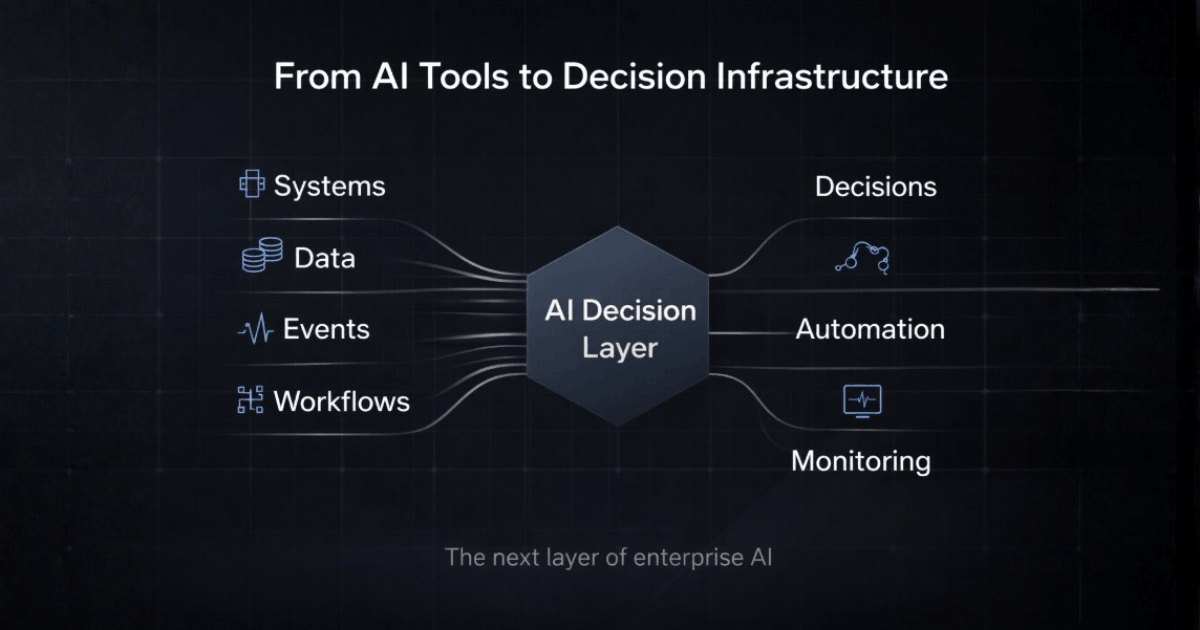
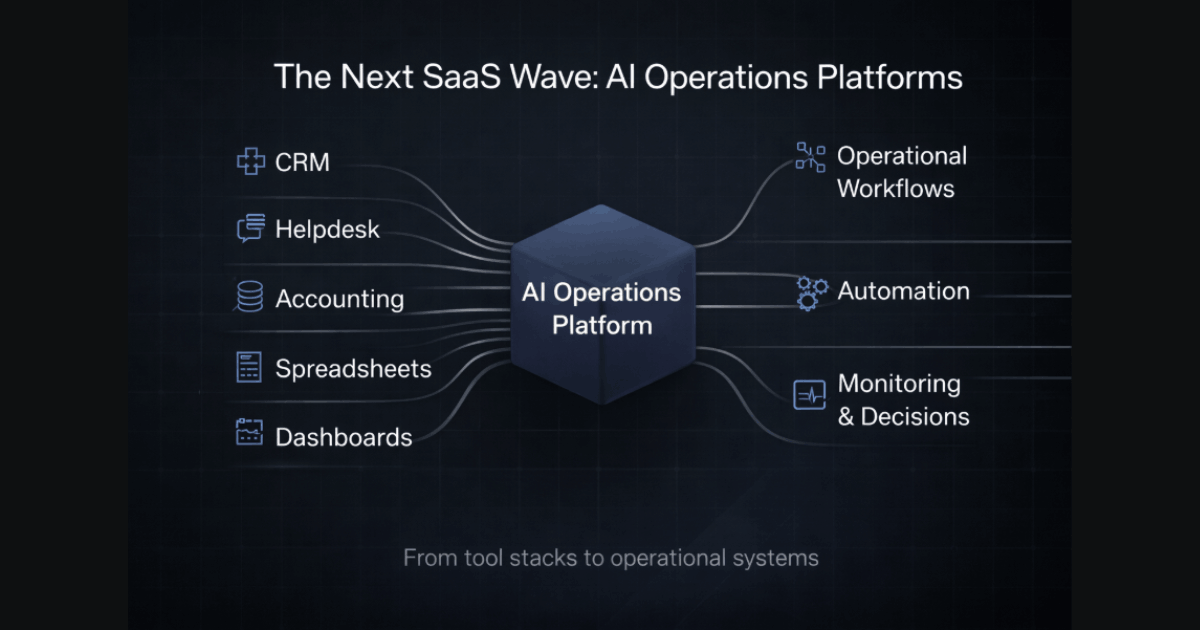
AI Operations Platforms act as an operational layer above the SaaS stack.
Instead of focusing on individual applications, they focus on running business workflows across systems.
These platforms combine four key capabilities:
System connectivity Integrating CRMs, financial systems, messaging platforms, and internal tools.
Workflow orchestration Executing multi-step operational processes across systems.
AI-driven reasoning Interpreting context, identifying anomalies, and assisting decisions.
Operational monitoring Tracking workflows in real time and detecting issues before they escalate.
The result is not simply automation.
It is a system capable of running operational processes continuously across the organisation.
Where this shift is already visible
Early forms of AI-driven operations are emerging across several business domains.
Customer operations
AI systems are beginning to orchestrate entire customer workflows - from inbound lead response to scheduling, follow-ups, and CRM updates.
Finance operations
Processes such as invoice handling, reconciliation, and anomaly detection are increasingly automated and continuously monitored.
Operational monitoring
Organisations are implementing systems that track workflow execution, detect delays, and coordinate operational responses.
Marketing and sales operations
AI platforms are connecting CRM data, campaign analytics, and reporting systems to automate insight generation and execution.
Across these domains, the shift is the same.
The system is no longer just storing data. It is running the workflow.
The architecture behind AI-driven operations
Most AI operations platforms follow a layered architecture:
System layer Enterprise tools such as CRM, ERP, SaaS applications, and internal databases.
Integration layer APIs and connectors that unify data across systems.
Orchestration layer Workflow engines that coordinate multi-step operational processes.
Intelligence layer AI models that interpret context and support decisions.
Monitoring layer Continuous observability, alerts, and exception handling.
Many organisations stop at the integration layer.
The real leverage begins when orchestration, intelligence, and monitoring operate together as a unified system.
From software tools to operational systems
This shift changes how organisations think about technology.
The traditional model was straightforward:
Buy software tools. Hire people to operate them. Scale through coordination.
The emerging model looks different:
Build operational systems. Allow AI to run workflows across tools. Scale through execution.
The companies that win in the next decade will not necessarily have the most tools.
They will have the best-running operational systems.
Where Lektik fits
Building AI operations platforms requires deep integration across enterprise systems, workflow orchestration, and AI-driven reasoning layers.
This is the type of operational architecture Lektik designs and implements for organisations exploring how AI can move beyond isolated tools and become part of the operational backbone of the business.
The goal is simple:
Not just software that stores data - but systems that run operations reliably at scale.
The next SaaS wave
For years, software focused on helping teams manage information.
The next wave of enterprise systems will focus on executing operations.
AI operations platforms represent an early stage of this transition.
They turn fragmented SaaS environments into coordinated operational systems.
And over time, they will become a foundational layer in how modern businesses scale.
The next SaaS wave will not be defined by better tools.
It will be defined by systems that run the business itself.