In large procurement environments, visibility is often mistaken for decision maturity.
Supplier quotations get centralized. Incoming offers become searchable. Product references are mapped. Procurement teams no longer spend their entire day digging through emails, spreadsheets, PDFs, and message threads simply trying to understand what has arrived.
Operationally, this is a meaningful improvement.
But it does not automatically translate into better buying decisions.
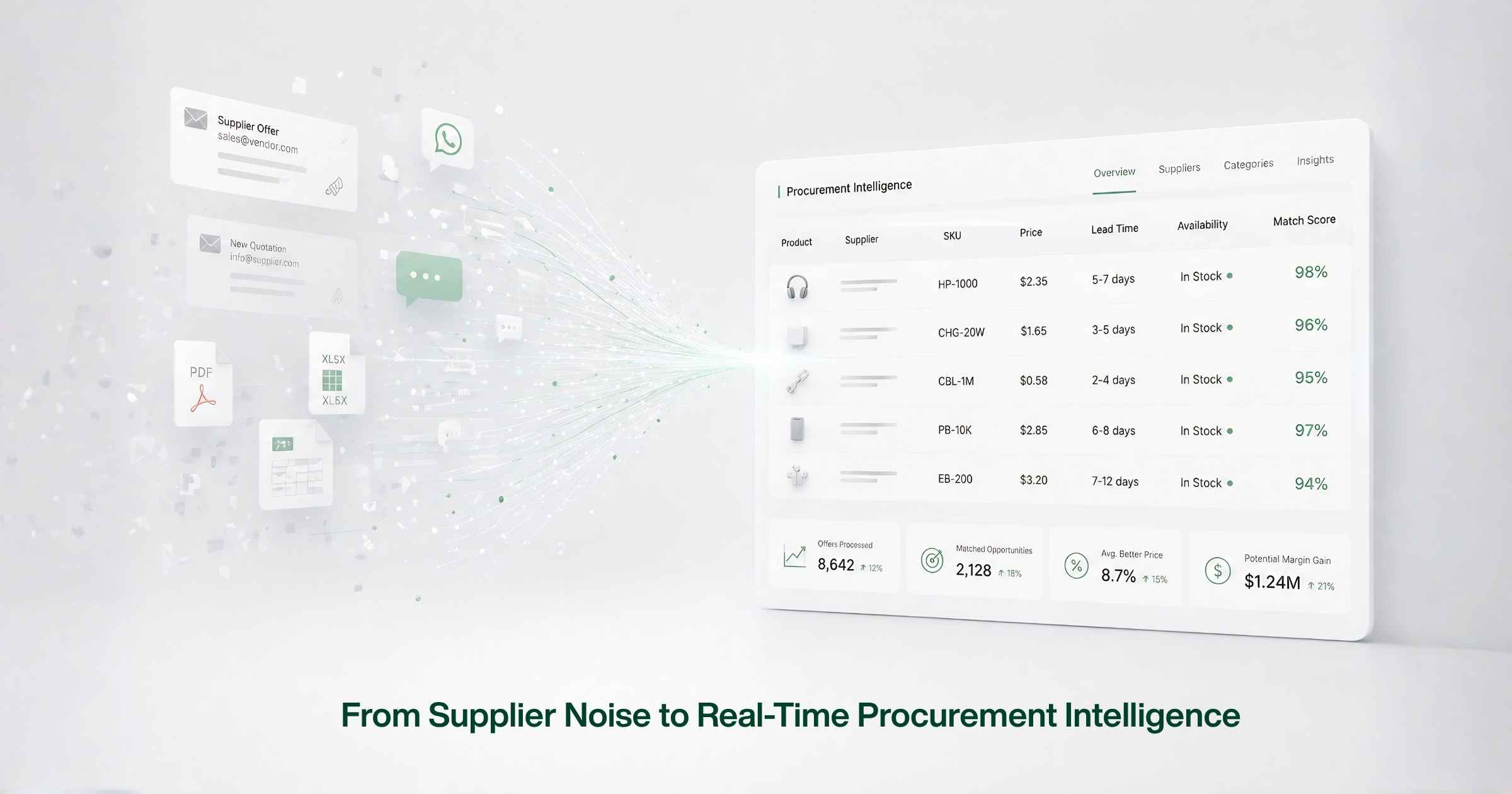
In our previous article, we explored how fragmented supplier communications can be transformed into a centralized procurement intelligence pipeline. But centralized visibility only solves the first half of the procurement challenge.
The next—and far more commercially important—question is this:
once supplier data is organized, how do procurement teams consistently decide what to buy, when to buy, and which supplier actually creates the strongest outcome?
That distinction became clear in the next phase of the same multinational wholesale procurement environment, where supplier offers had already been structured, normalized, and made instantly accessible across buying teams.
The organization had become faster at seeing supplier data.
It had not yet become smarter at deciding what to do with it.
Why Better Visibility Still Leaves Procurement Teams Guessing
Once supplier information was centralized, buyers could quickly evaluate which vendors had quoted which products, at what prices, and under what terms.
But the critical procurement questions still remained manual.
A lower quote did not automatically answer whether this was the right time to buy that category.
A familiar supplier did not necessarily mean the best commercial outcome after factoring in landed costs and delivery consistency.
A product showing immediate availability did not always mean it aligned strongly enough with near-term sales movement to justify aggressive purchasing.
In practice, procurement conversations continued to revolve around the same recurring uncertainties:
Should we lock this pricing now, or wait another week? Is this vendor actually more competitive, or just cheaper on paper? Are we repeatedly defaulting to familiar buying patterns and missing margin elsewhere? Which incoming offers are genuinely aligned with expected near-term movement?
These are not visibility questions.
These are decision-quality questions.
And most procurement systems stop before addressing them.
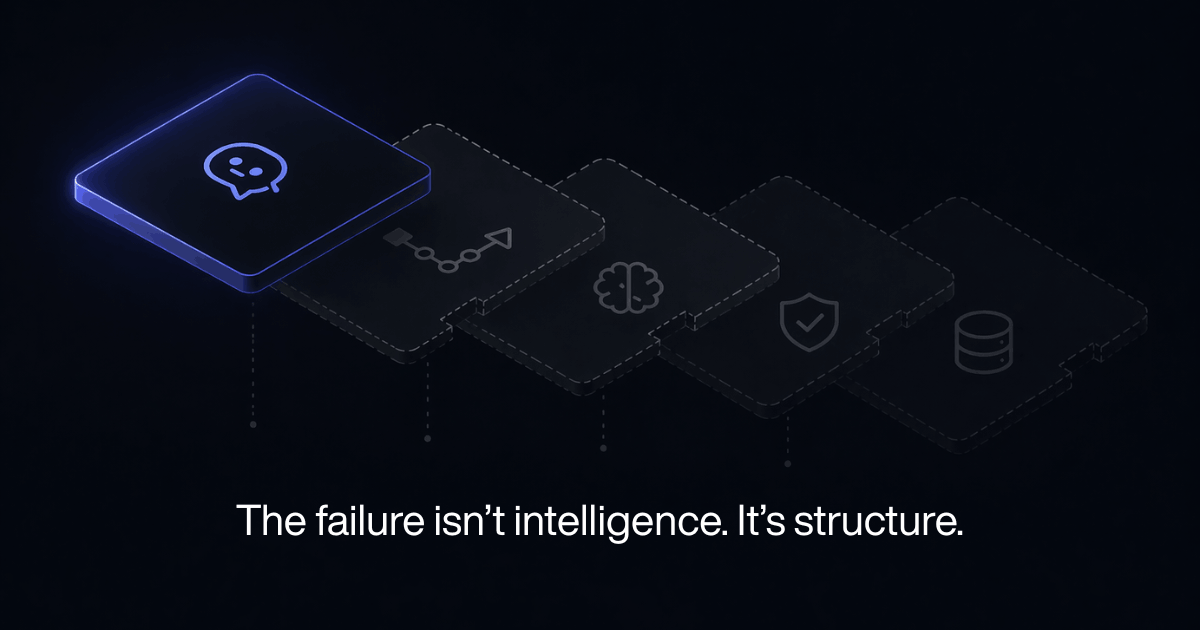
The Procurement Plateau Most Organizations Do Not Notice
This is where many procurement transformations quietly plateau.
Data becomes organized. Dashboards improve. Supplier comparisons become faster.
But the buyer is still left to manually synthesize multiple commercial signals under time pressure:
- current vendor quotation
- category pricing movement
- historical vendor behavior
- active sales demand
- delivery consistency
- margin implications
Without a system capable of connecting these signals, decision-making remains dependent on human instinct—even in a data-rich environment.
Which means the organization may appear digitally mature on the surface while still leaking margin through inconsistent purchasing choices underneath.
Lektik’s next focus, therefore, was not additional reporting.
It was procurement decision intelligence.
Building a Predictive Procurement Layer Above Supplier Data
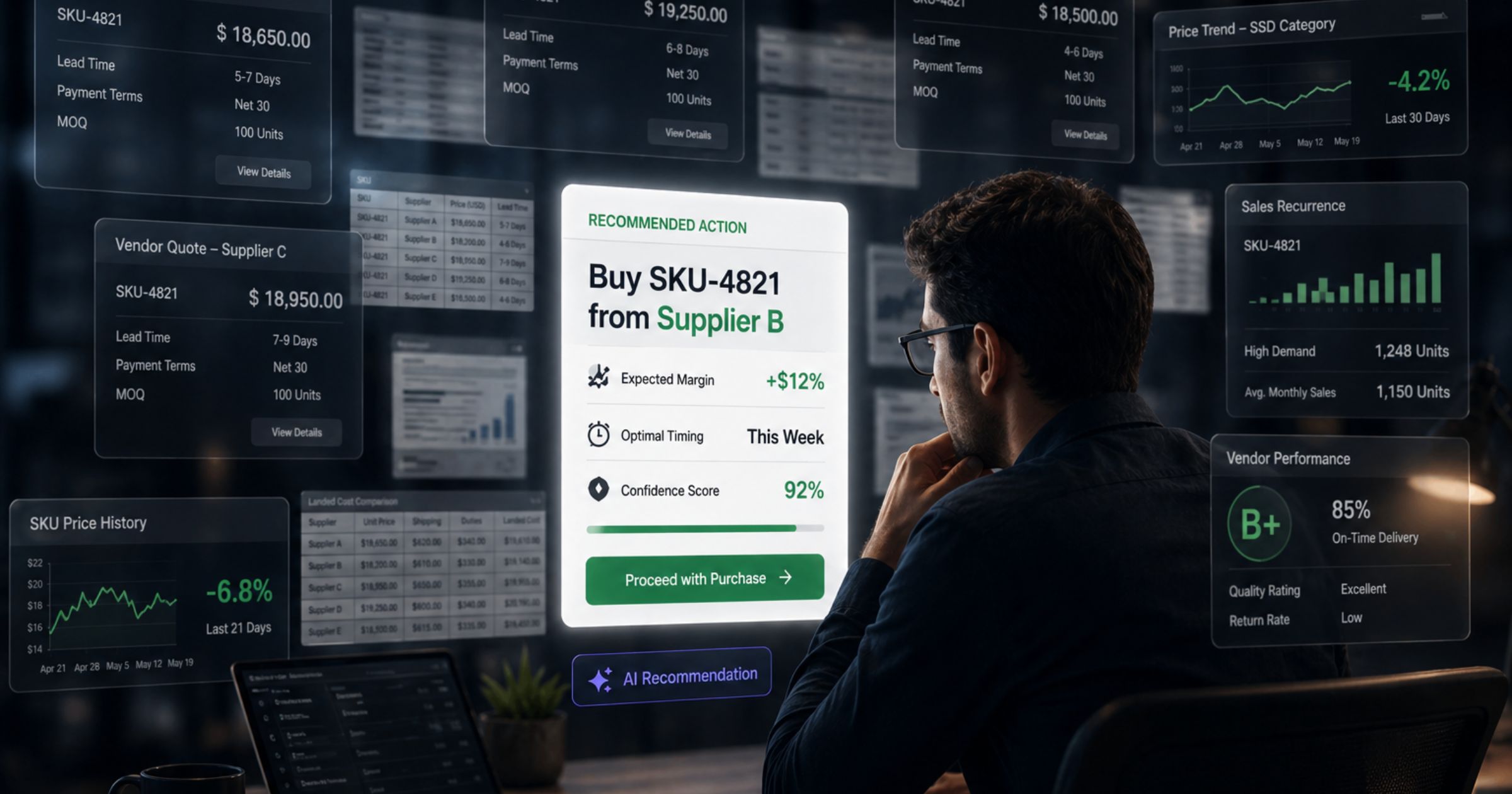
Rather than asking buyers to manually interpret every incoming quotation, Lektik introduced a predictive procurement decision layer designed to evaluate commercial context continuously and surface stronger buying recommendations.
This layer sat directly on top of the structured supplier intelligence pipeline and began analyzing each incoming procurement opportunity through a broader commercial lens.
Vendor Competitiveness Beyond the Current Quote
The lowest quote in front of a buyer is not always the best vendor decision.
Some suppliers repeatedly quote aggressively but create landed cost disadvantages through delayed dispatch, inconsistent fulfillment, or unreliable availability.
Others may quote slightly higher while consistently enabling better downstream delivery outcomes.
By analyzing historical supplier performance alongside current quotations, the system began scoring vendors not simply on quoted price, but on commercial reliability.
This reduced the tendency to chase the cheapest visible number without understanding the broader procurement consequence.
Category Price Movement and Timing Awareness
A quotation also does not exist in isolation.
In several high-movement categories, procurement teams observed that buying too quickly at a “good” visible price often meant purchasing before a short-term downward cycle had fully played out.
In other categories, delayed buying repeatedly resulted in missed margin due to rapid price tightening.
Lektik introduced category-level price movement intelligence to help buyers understand whether a quotation should trigger immediate action, cautious review, or strategic waiting.
This moved procurement away from single-quote evaluation toward timing-aware buying.
Demand-Aligned Buying Signals
Another recurring issue was that attractive supplier offers were still being evaluated without enough connection to what the business was actually likely to sell over the coming weeks.
Some SKUs had recurring movement and dependable resale demand.
Others appeared attractive only because of temporary supplier pricing.
By connecting procurement decisions with sales recurrence patterns and recent demand movement, the platform began identifying which incoming offers represented genuine commercial opportunities rather than simply low-priced inventory.
This prevented capital from being tied up in purchases that looked good in isolation but were weak in practical turnover.
Margin-Based Recommendation Scoring
Most importantly, each procurement opportunity was no longer being viewed purely as a cost decision.
It was being evaluated as a margin decision.
Expected resale spread, historical sourcing patterns, alternate vendor scenarios, and category movement were brought together to estimate where the strongest commercial advantage actually existed.
This changed the role of procurement from obtaining supply to protecting profitability.
What Changed for the Buying Teams
Before this layer was introduced, buyers were primarily evaluating quotations.
After implementation, buyers began receiving ranked procurement guidance.
Not just:
which vendors quoted.
But:
which offers deserved immediate action, which categories warranted waiting, which suppliers created stronger overall commercial outcomes, and where repeated buying patterns were reducing margin efficiency.
Decision-making no longer depended entirely on whichever buyer happened to be reviewing supplier offers that day.
Commercial judgment became more system-assisted, more consistent, and materially more scalable.
The Strategic Shift: Procurement Stops Being Reactive
This is the point at which procurement stops functioning as a quotation-handling exercise and starts functioning as a predictive commercial engine.
Supplier visibility alone gives organizations speed.
Predictive procurement intelligence gives them buying discipline.
That difference matters because in high-volume sourcing environments, margin loss rarely happens through one catastrophic mistake.
It happens through hundreds of small, instinct-driven purchasing decisions made without enough contextual intelligence.
Lektik’s predictive procurement layer was designed specifically to close that gap.
Not by replacing buyers.
But by equipping buyers with stronger decision context than manual review alone could provide.
Closing Perspective
The first phase of procurement modernization is making supplier communication usable.
The second—and far more commercially valuable phase—is making procurement decisions smarter.
Organizations that stop at visibility gain efficiency.
Organizations that build a predictive decision layer gain competitive buying advantage.
Because once supplier data is centralized, the real question is no longer:
“What offers do we have?”
It becomes:
“What is the smartest commercial move to make next?”
That is where procurement begins to influence margin in a far more strategic way.
Continue Reading from Part 1
How fragmented supplier emails, PDFs, and spreadsheets were transformed into a centralized procurement intelligence pipeline.
Read Part 1 → Transforming Unstructured Supplier Communications into a Real-Time Procurement Intelligence System