Why your startup feels chaotic (and when founders start looking for help)
At some point, every founder hits this phase:
- Too many decisions
- Too many tools
- Not enough clarity
Execution slows down. The team feels misaligned. Nothing is “broken”—but nothing is smooth either.
This is when searches start happening:
- “why my startup feels chaotic”
- “startup struggling with execution”
- “how to make better decisions in business”
- “hire AI specialists for my startup”
- “tech consultation for my venture”
And here’s what’s actually going on:
You don’t just need better tools. You need a better system—and often, the right people to build it.
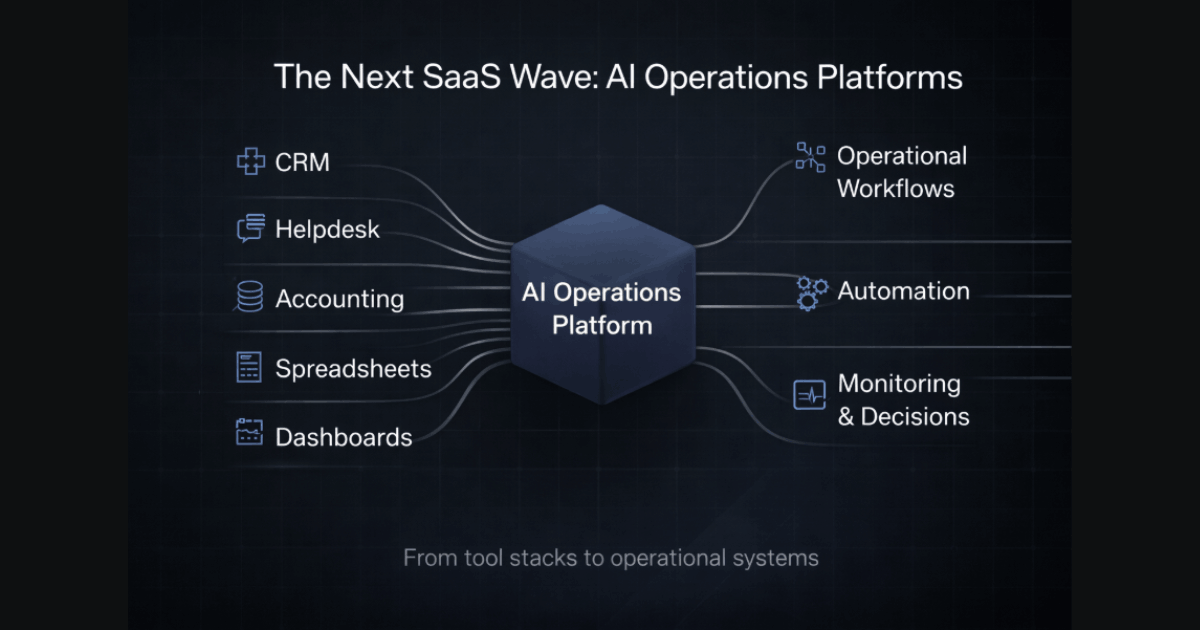
The real problem: You don’t need more tools—you need a system (and expertise to design it)
Most startups try to solve chaos by adding:
- Another dashboard
- Another automation
- Another tool
But the problem isn’t missing tools.
It’s missing decision structure.
And more importantly:
Most founders don’t know how to design a decision making system for startups on their own.
That’s where the gap begins between:
- Having resources
- And knowing how to use them effectively
What is Decision Infrastructure? (And why experts build it faster)
Decision Infrastructure is the system that helps a business consistently make, execute, and improve decisions using data, frameworks, AI support, and feedback loops.
Here’s the key:
- Founders feel the problem
- But experienced operators and AI experts know how to structure the solution
This is why many startups eventually look for:
- AI strategy for startups
- product and tech strategy support
- startup execution partners
The 4 Layers - And where most teams get stuck without expert help
1. Inputs (What matters vs what’s noise)
Most teams track everything—but prioritize nothing.
Experts help define:
- Signal vs. noise
- Decision-driving metrics
- Real business indicators
2. Decision Layer (The hardest part to build alone)
This is where founders struggle most.
A strong business decision framework requires:
- Prioritization models
- Trade-off clarity
- Structured decision-making
- AI-assisted analysis
Without experience, this becomes: → gut decisions → inconsistent thinking → unclear direction
3. Execution Layer (Where startups feel slow)
Even good decisions fail without structure.
This is where startup execution partners create:
- Clear workflows
- Ownership systems
- Faster cycles
4. Feedback Loop (What most teams skip entirely)
Without feedback systems:
- Mistakes repeat
- Learning is lost
- Growth stalls
Experts build:
- Learning loops
- Experiment tracking
- Decision improvement systems
Why founders start looking for AI and tech experts
There’s a moment every founder hits:
“We have everything… so why isn’t this working?”
That’s when the search shifts from:
- “tools” → to “people who can fix this”
Common triggers:
- Startup feels chaotic
- Too many tools but no system
- Overwhelmed with decisions
- Slow execution in startup
- Unclear business direction
And this leads to high-intent searches like:
- hire AI specialists for my startup
- startup strategy consulting
- tech consultation for my venture
- expert help for building startup systems
Where AI experts actually add value
Not by replacing founders. Not by “running the business.”
But by building:
- AI support for business decisions
- Intelligent prioritization systems
- Decision intelligence layers
- Operational clarity
The best AI systems don’t make decisions. They make good decisions easier to make.
Real scenarios where startups need expert support
1. “We don’t know what to prioritize”
→ Product roadmap chaos → Feature overload
Fix:
- Structured prioritization systems
- AI-assisted decision scoring
2. “Execution is slower than it should be”
→ Tasks move, outcomes don’t
Fix:
- Decision-to-execution pipelines
- Operational system design
3. “We have data, but no clarity”
→ Dashboards everywhere → Insights nowhere
Fix:
- Decision intelligence for companies
- AI-supported analysis layers
When should you hire a tech team or AI experts?
You don’t need them on day one.
But you do need them when:
- Decisions are slowing you down
- Growth feels inconsistent
- The team is misaligned
- You’re guessing more than deciding
Because at this stage:
The problem is no longer effort. It’s system design.
What to actually look for (most founders get this wrong)
Don’t just hire:
- Developers
- Freelancers
- Tool specialists
Look for:
- Startup execution partners
- Teams that understand decision systems
- Experts in AI strategy for startups
- Operators who’ve built scaling systems
The real advantage of working with the right partner
They don’t just:
- Build features
- Set up tools
They:
- Design how decisions are made
- Structure how execution flows
- Create systems that scale
This is the difference between:
Working harder vs operating smarter
FAQ
When should I hire AI experts for my startup?
When decisions are slowing down execution, and your team lacks a structured system to prioritize and act effectively.
Do I need a tech team or just better tools?
If you already have tools but still feel chaotic, you likely need expert help to design systems—not more tools.
What does a startup execution partner do?
They build systems for decision-making, execution, and learning—so your startup runs with clarity and speed.
How can AI improve business decision making?
AI helps analyze data, identify patterns, and support structured decisions—but works best within a defined system.
What is tech consultation for startups?
It’s expert guidance on building scalable systems, choosing the right tech stack, and aligning operations with business goals.
Final Insight
Most founders don’t need more tools. They need the right people to build the system behind their decisions.
Because startups don’t scale on effort. They scale on clarity—and clarity is engineered.