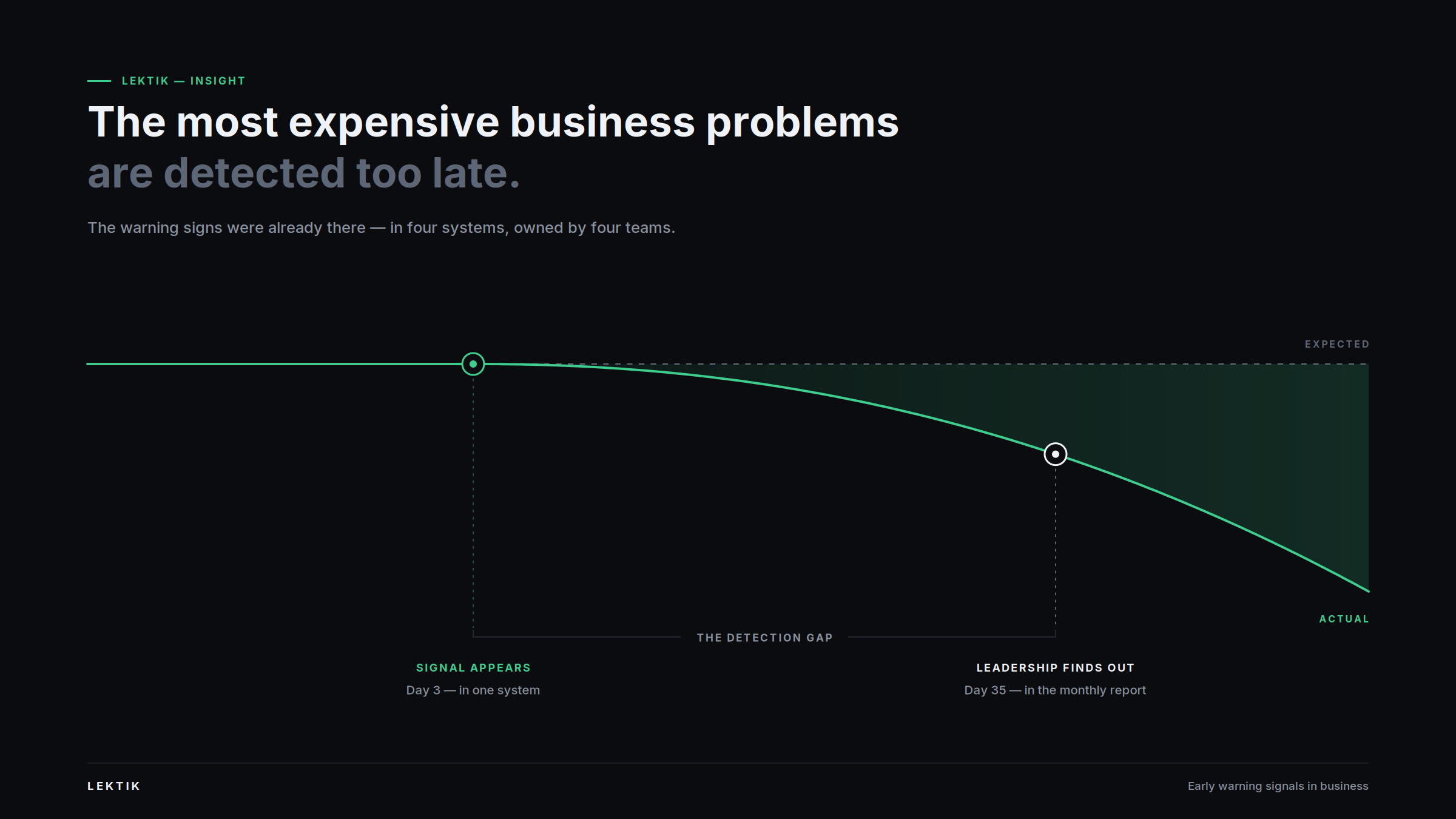
Most businesses already have the technology they need—CRM platforms, support software, call systems, booking tools, and knowledge bases. The problem is that these systems often operate separately.
When a customer reaches out, they don't care which system holds the answer. They care about getting help right now.
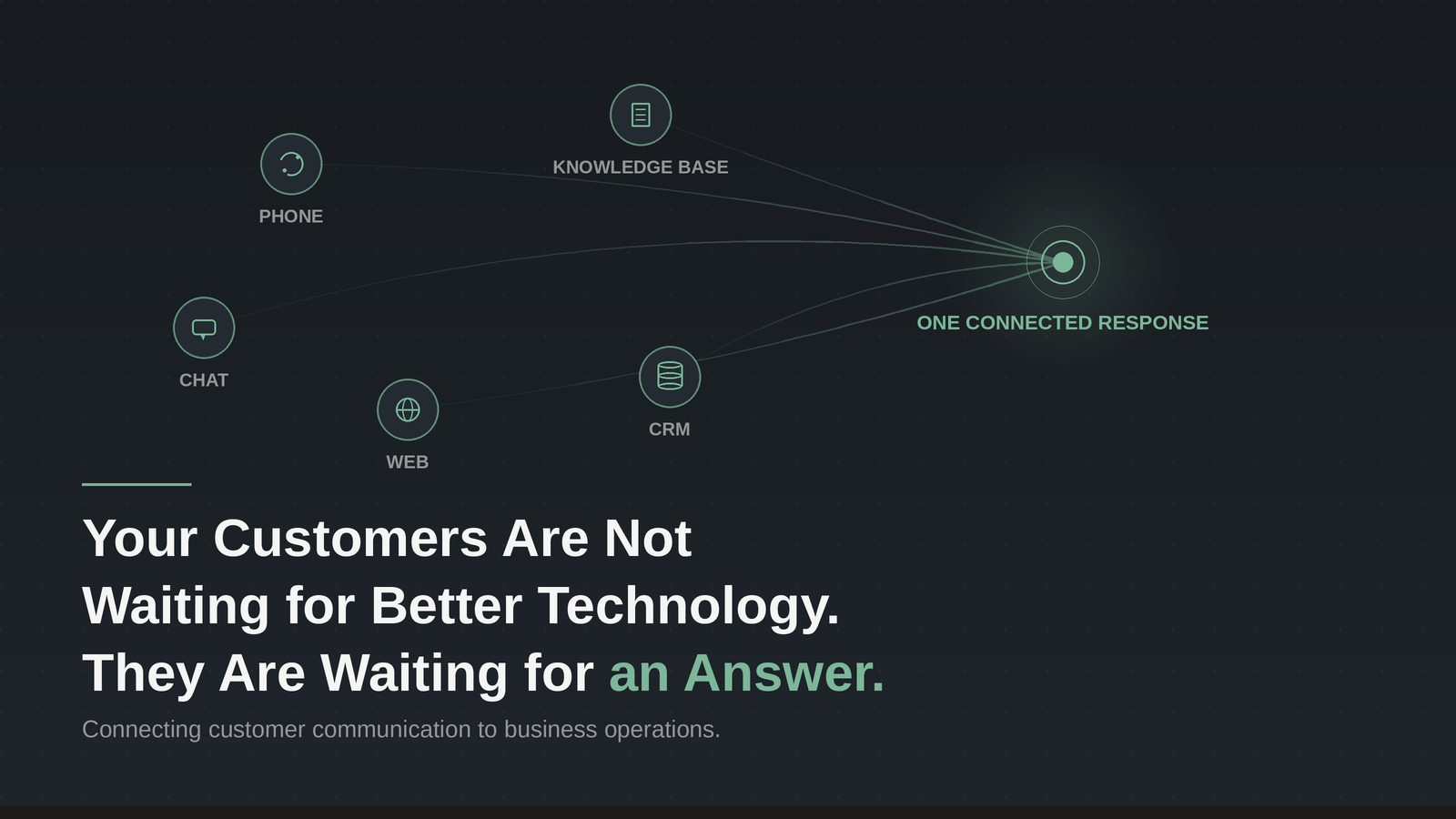
Lektik connects customer communication with the information, people, and actions needed to respond in real time—across phone, web, chat, and enterprise systems.
Your Business Has the Tools. They Just Don't Talk to Each Other.
A customer calling about an appointment, an order, or a claim isn't thinking about your technology stack.
They're thinking:
"Can you help me right now?"
And this is where many businesses fall short.
A typical enterprise may already have:
- A CRM that knows the customer
- A knowledge base that contains the answer
- A call system handling incoming enquiries
- A booking platform managing availability
- A support platform tracking cases
Yet the customer may still be waiting on hold, repeating information, waiting for a callback, or being transferred between teams.
The problem isn't a lack of technology. It's the gap between those systems when a customer actually needs help.
Slow Response Has a Commercial Cost
Response speed is no longer just a customer service metric. It directly affects business performance.
Faster response → Higher conversion
Lead-response research consistently shows that contacting prospects within minutes can produce significantly better conversion outcomes than waiting tens of minutes or longer.
Faster resolution → Better customer experience
When customer context travels with an interaction instead of resetting at every handoff, teams can resolve requests faster and with fewer repeated questions.
Fewer missed calls → Less revenue leakage
An unanswered call isn't simply a missed interaction. It can be a missed opportunity, particularly when customers have alternatives just a click away.
Better follow-up → Better retention
Slow responses don't only affect new customers. Existing customers also lose confidence when simple requests require repeated follow-ups.
The longer customers wait, the more opportunities a business creates for them to leave.
24/7 Doesn't Mean Human-Free
Automation often raises an understandable concern:
If AI handles customer enquiries around the clock, where do people fit in?
The answer isn't to remove people. It's to make sure they focus on interactions where they add the most value.
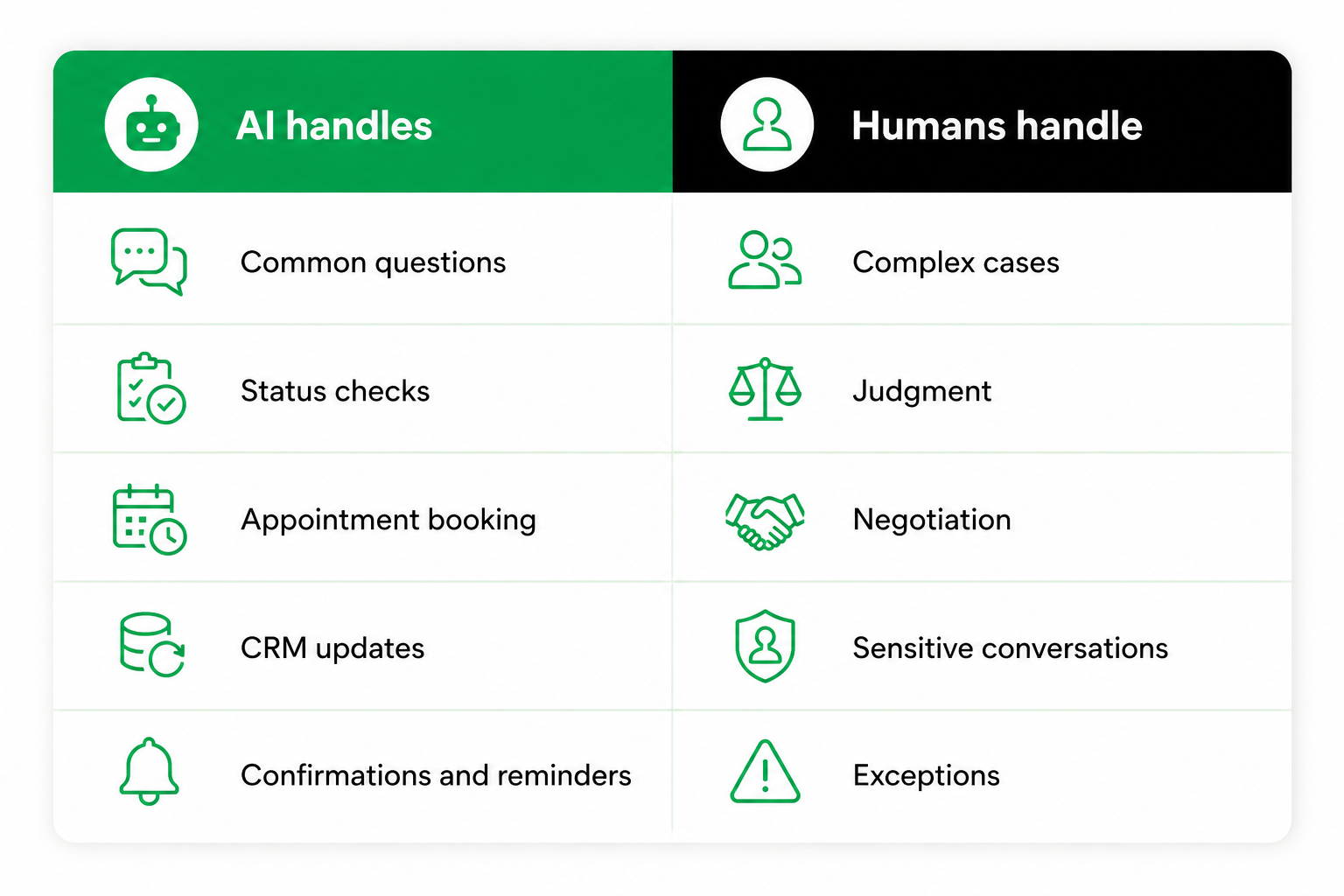
AI provides speed, availability, and scale.
People provide judgment, empathy, and accountability.
The goal isn't to automate every conversation.
It's to make sure every conversation reaches the right outcome.
Not Every Enquiry Needs a Human
Service teams often become overloaded because routine and complex enquiries enter the same queue.
Many customer requests can be resolved immediately using information the business already has.
Handle immediately
- Answer common questions
- Retrieve customer or service information
- Check order or request status
- Book or reschedule appointments
- Create or update CRM records
- Send confirmations and reminders
Route with context
Some enquiries need a person—but the entire process doesn't need to be manual.
Route immediately when a request involves:
- High-value or high-intent opportunities
- Complex or ambiguous situations
- Exceptions to standard policy
- Negotiation or decision-making
- Sensitive conversations
- Requests that remain unresolved after an initial response
The dividing line isn't whether a request is important. It's whether it requires human judgment.
From Customer Enquiry to Resolution
A connected customer experience should be one continuous flow:
01 — Customer reaches out
Through phone, web, chat, or another channel.
↓
02 — The enquiry is understood
The system connects the request to relevant customer and enterprise information.
↓
03 — Routine requests are resolved
If the answer already exists, the customer gets it immediately.
↓
04 — Complex requests are routed
If a person is needed, the enquiry reaches the right team with context attached.
↓
05 — Actions happen automatically
Bookings, CRM updates, notifications, and follow-ups are triggered in the systems that need them.
↓
06 — Everyone knows what's next
The customer and business have visibility into the request.
The customer shouldn't have to understand what's happening behind the scenes.
They should simply get an answer, an action, or the right person—without starting over.
This Is Where Lektik Fits
Lektik connects the systems you already have to the moment your customer reaches out.
It creates a connected response layer across phone, web, chat, and enterprise knowledge, allowing customer communication and business operations to work as one flow.
Answer
- Answer routine questions using enterprise knowledge
- Retrieve customer and service information in real time
- Provide consistent information across channels
Act
- Book and reschedule appointments
- Create and update CRM records
- Send confirmations and reminders
- Trigger follow-up workflows
Escalate
- Identify high-value enquiries
- Route requests to the right team
- Escalate complex situations
- Pass relevant context along with the interaction
You don't need to replace the systems your business already relies on.
The value comes from connecting them.
Your Technology Already Knows the Answer. Deliver It.
Your CRM already knows who the customer is.
Your knowledge base already has the information.
Your booking system already knows what's available.
Your support platform already knows what's happening.
The challenge is connecting all of that information when the customer needs it.
Lektik helps businesses respond faster by connecting customer enquiries directly to the information, people, and actions needed to resolve them.
The result:
Faster answers. Fewer missed opportunities. Better customer experiences.
Because customers aren't waiting for better technology.
They're waiting for an answer.
Frequently Asked Questions
Why are customers still waiting when businesses already have CRM and support software?
Because these systems are often implemented separately and don't share context in real time. The issue isn't necessarily missing technology—it's the lack of connection between customer communication and business operations.
How does response time affect conversion?
Faster first response is consistently associated with stronger conversion outcomes. The difference between responding in minutes and responding much later can have a meaningful commercial impact.
Does 24/7 customer service mean replacing human agents?
No. AI is best used to provide speed and availability for routine interactions, while people handle complexity, judgment, empathy, and exceptions.
What customer enquiries can AI handle?
AI can typically handle repeatable, information-based requests such as FAQs, status checks, appointment scheduling, confirmations, and CRM updates—provided the required information and workflows are accessible.
What is a connected response layer?
It is a system that connects customer communication channels with enterprise knowledge, customer data, business systems, and human teams. It allows enquiries to be understood, resolved, routed, and recorded without unnecessary handoffs.
How does Lektik help businesses respond faster?
Lektik connects customer communication directly to the information, people, and systems needed to resolve an enquiry—answering routine questions, taking actions, updating systems, and routing complex requests to the right person with context intact.