Most CEOs don't wake up wondering whether they're using agentic AI.
They wake up wondering why profitability declined.
Why customer acquisition costs increased.
Why operational expenses continue to rise despite automation investments.
Why critical decisions still take days or weeks to make
The challenge isn't a lack of data
In fact, most enterprises have more data than ever before.
The challenge is that the data lives everywhere.
Finance has one version of reality.
Sales has another.
Operations has a third.
Customer support has a fourth.
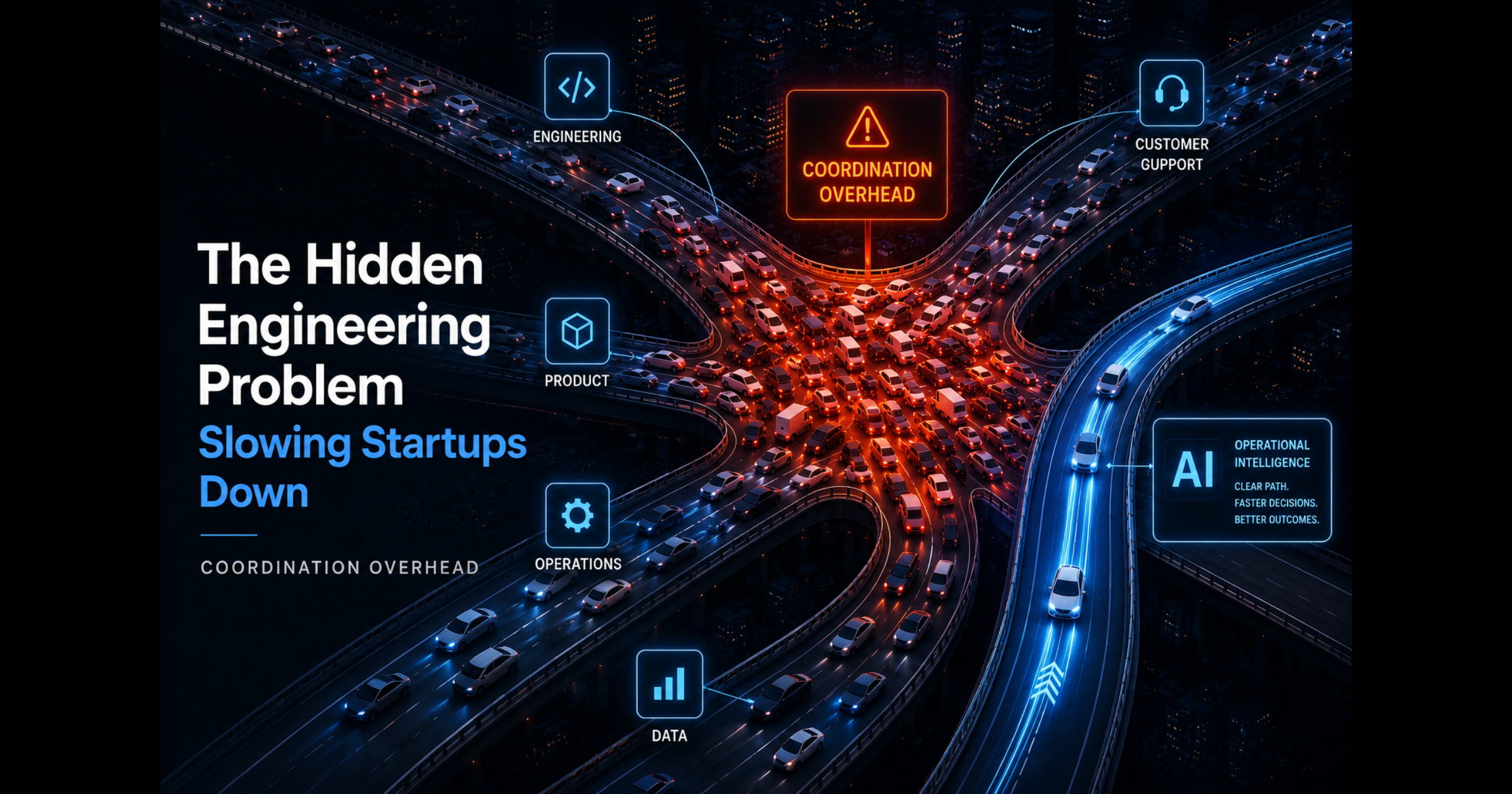
And leadership spends countless hours trying to connect the dots between them.
This is the problem AI Operating Systems are designed to solve.
While much of the AI conversation over the past three years has focused on chatbots, copilots, and content generation, a more significant shift is now underway inside enterprise organizations.
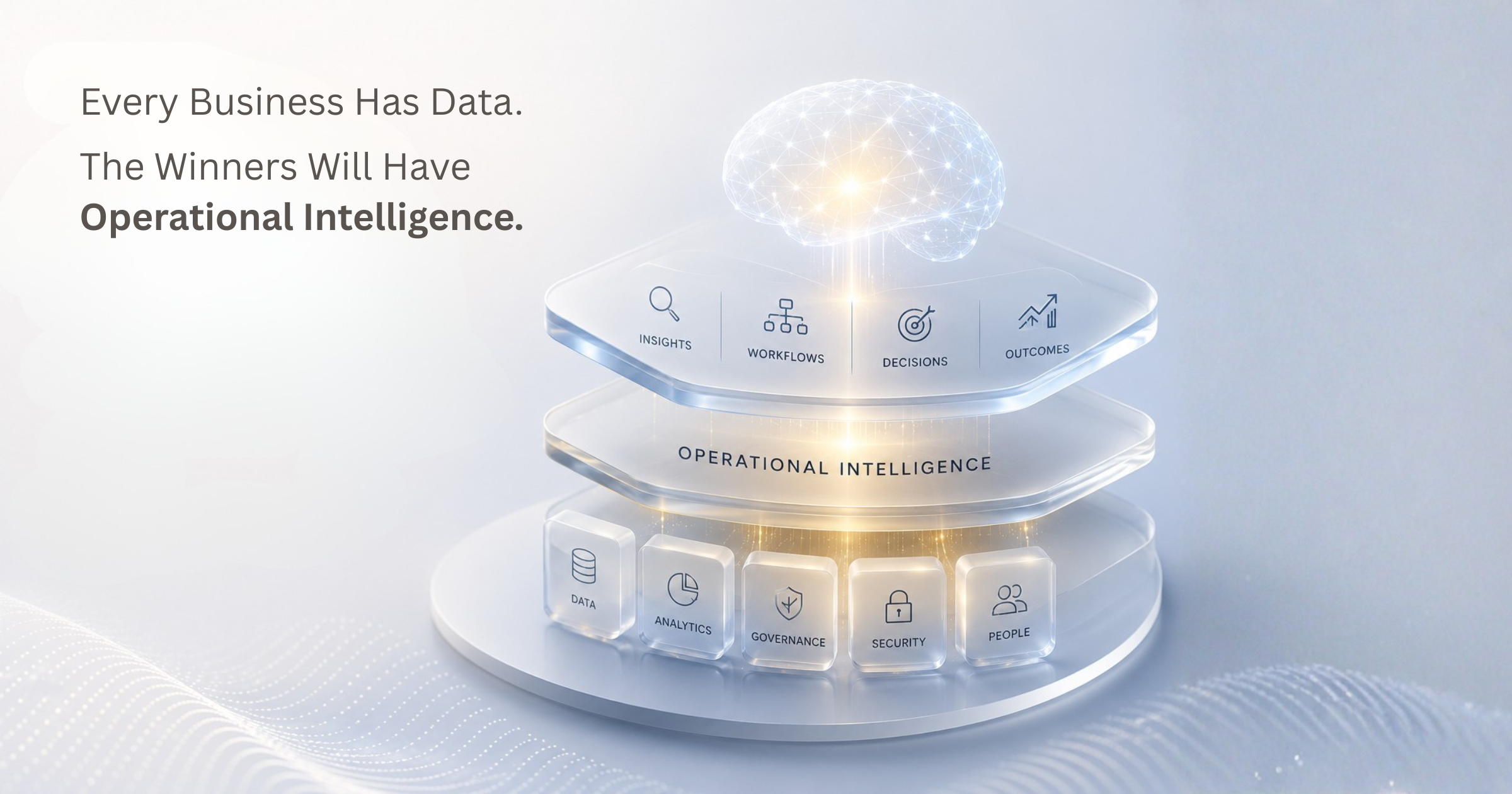
AI is moving from being a productivity tool to becoming an operational intelligence layer.
And the companies pulling ahead are no longer using AI simply to assist employees.
They're using AI to orchestrate workflows, connect systems, surface insights, and help leaders make faster, more informed decisions.
This isn't a software upgrade.
It's a new operating model.
The Numbers Every Executive Should Pay Attention To
The market signals behind this shift are impossible to ignore.
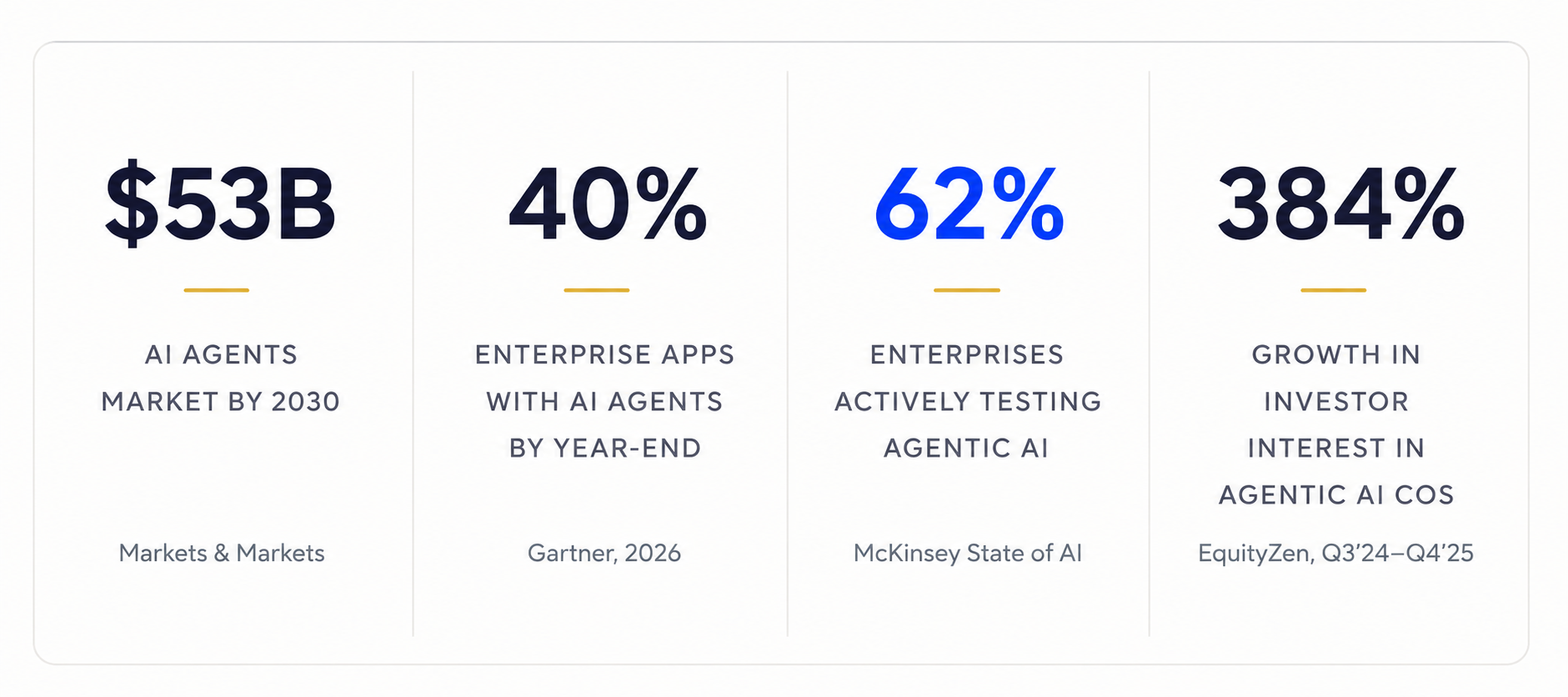
Taken individually, these numbers are impressive.
Taken together, they point to something much larger.
We are witnessing the emergence of a new enterprise technology layer.
Just as ERP systems centralized operations and cloud platforms transformed software delivery, AI Operating Systems are beginning to transform how organizations understand and run their businesses.
The organizations investing today are not simply adopting another technology trend.
They are building the infrastructure for faster decision-making, greater visibility, and more intelligent operations.
The Question Every CEO Eventually Asks
Imagine a U.S.-based manufacturing company generating $50 million annually.
The CEO notices profitability has declined.
The question sounds simple:
Why did profits drop last quarter?
Traditionally, answering this question requires multiple departments.
Finance investigates costs.
Operations reviews production performance.
Procurement analyzes supplier activity.
Sales examines customer demand.
Reports are generated.
Meetings are scheduled.
Data is consolidated.
Weeks pass before leadership gets a complete picture.
An AI Operating System changes that dynamic entirely.
The same question is asked.
Within seconds, the system identifies:
✔ Supplier lead times increased by 18%
✔ Raw material costs rose by 12%
✔ Production efficiency dropped by 14% at a key facility
✔ Customer demand shifted away from high-margin products
But more importantly, it explains the relationship between those variables.
It doesn't simply provide information.
It provides operational intelligence.
And that distinction is becoming one of the most important competitive advantages in modern business.
From AI Assistants to AI Operating Systems
One of the biggest misconceptions in the market today is treating chatbots, AI agents, and AI Operating Systems as the same thing.
They are not.
A chatbot answers questions.
An AI agent completes tasks.
An AI Operating System orchestrates outcomes.
A chatbot might answer an employee's HR question.
An AI agent might update a CRM record.
An AI Operating System coordinates actions across finance, operations, customer support, sales, procurement, and compliance to achieve a business objective.
This evolution represents a fundamental shift in enterprise technology
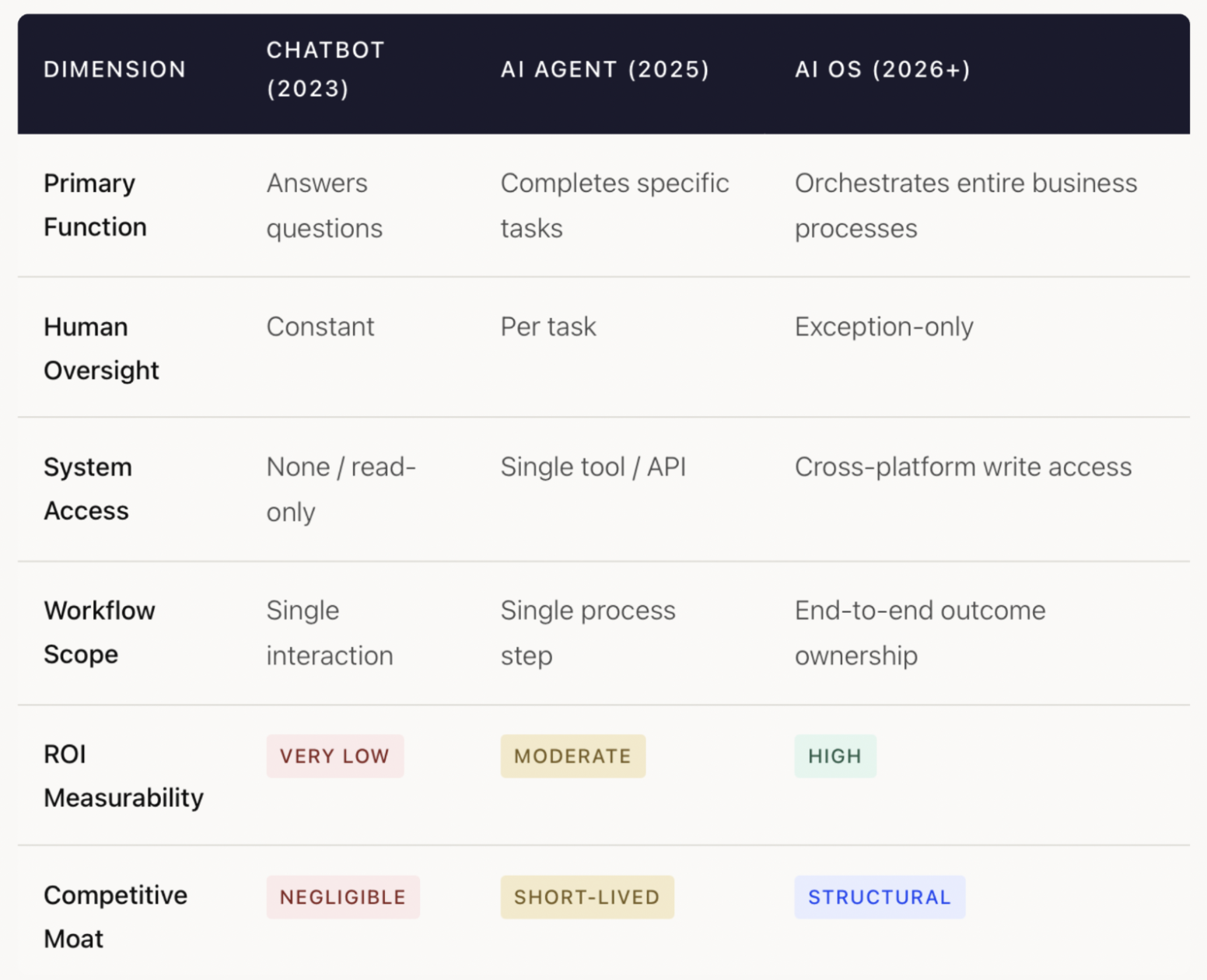
The conversation inside executive boardrooms is no longer about whether AI can generate content.
The conversation is increasingly about whether AI can improve how the business operates.
And that's where AI Operating Systems enter the picture.
Why AI Operating Systems Matter More Than AI Tools
Businesses don't win because they have more software.
They win because they make better decisions.
For years, organizations invested heavily in:
- CRM systems
- ERP platforms
- Business intelligence tools
- Customer support software
- HR systems
- Operational dashboards
Each platform solved a specific problem.
But together they created a new challenge:
Data fragmentation.
Every department became more efficient.
Yet leadership often became less informed.
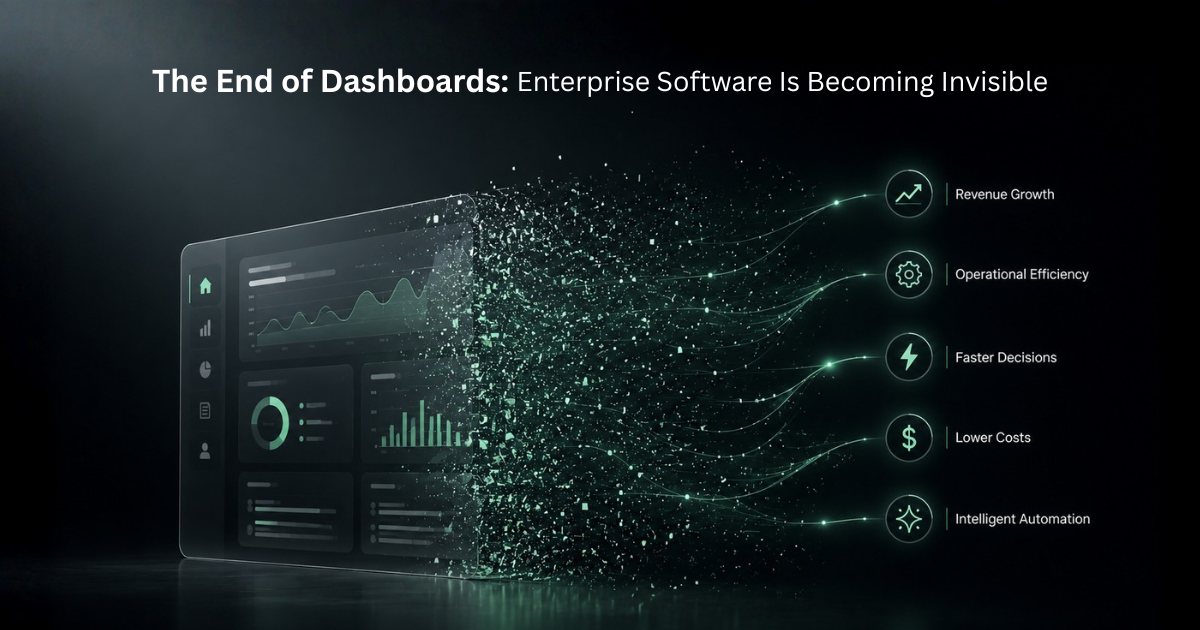
AI Operating Systems are emerging as the intelligence layer that sits above these systems, connecting them into a unified operational view.
Rather than creating another dashboard, they create context.
Rather than generating more reports, they generate clarity.
This is why many analysts now view AI Operating Systems as the next major evolution of enterprise architecture.
Not because they replace existing software.
But because they help organizations finally understand what their software is trying to tell them.
The Race to Become the Enterprise Intelligence Layer
The most valuable enterprise technology companies in the world have already recognized this shift.
Salesforce, Microsoft, ServiceNow, and emerging platforms such as Glean are all competing to become the intelligence layer that connects enterprise operations.
While their approaches differ, the objective is remarkably similar:
Create a unified environment where data, workflows, and decision-making converge.
The most important takeaway for business leaders isn't which company wins this race.
It's understanding why the race exists in the first place.
The market is moving toward a future where competitive advantage is determined not by access to information, but by the ability to transform information into action.
And that requires orchestration, governance, visibility, and intelligence at scale.
Final Thoughts
The future of enterprise AI isn't about replacing people. It's about eliminating the delay between a question and an answer. Businesses already have the data they need, What they lack is visibility.
AI Operating Systems are emerging as the intelligence layer that transforms fragmented information into coordinated action.
The organizations that embrace this shift won't simply automate more tasks.
They'll make better decisions. Move faster. Operate smarter.
And build a sustainable advantage in an increasingly AI-driven economy.
That's the real promise of Operational Intelligence.