Most enterprise AI conversations are still focused on connectivity.
That conversation is already moving on.
MCP standardizes how AI systems connect to enterprise capabilities. It significantly reduces integration complexity, but enterprise connectivity remains an implementation challenge. The next challenge is significantly harder:
How do multiple agents coordinate, make decisions, and operate inside enterprise environments in a way that is secure, auditable, and trustworthy?
The organizations that solve this layer first will be better positioned to scale AI beyond pilots and into core business operations.
The Shift Happening Right Now
The First Wave: Connectivity
MCP became the standard way for AI systems to access enterprise tools and data.
It solved a critical problem:
- One protocol instead of custom integrations
- Standardized access to enterprise systems
- Broad adoption across major AI vendors
- Enterprise-scale interoperability
For most organizations, this layer is rapidly becoming infrastructure.
Like APIs and TCP/IP before it, it is increasingly essential and increasingly invisible.
The Second Wave: Coordination
The next challenge is not connecting agents to tools.
It's enabling agents to work with other agents.
Questions enterprises now face include:
- Which agent should perform which task?
- How is work delegated?
- How is context preserved across handoffs?
- How are decisions audited?
- Who is accountable when something fails?
These are orchestration problems, not connectivity problems.
What MCP Solves, and What It Doesn't
MCP Solves
Agent-to-tool communication.
It allows an AI system to:
- Access databases
- Query business applications
- Read documents
- Execute actions through enterprise systems
In simple terms:
MCP gives agents access to enterprise capabilities.
MCP Does Not Solve
Agent-to-agent communication.
It does not provide native mechanisms for:
- Agent discovery
- Task delegation
- Cross-agent coordination
- Multi-agent workflow management
- Governance across agent networks
This is where newer standards such as Google's Agent2Agent (A2A) protocol enter the picture.
Why A2A Matters
A2A addresses a different challenge:
How autonomous agents communicate with each other.
Instead of focusing on tool access, it focuses on:
- Agent discovery
- Delegation
- Collaboration
- Task orchestration
Together:
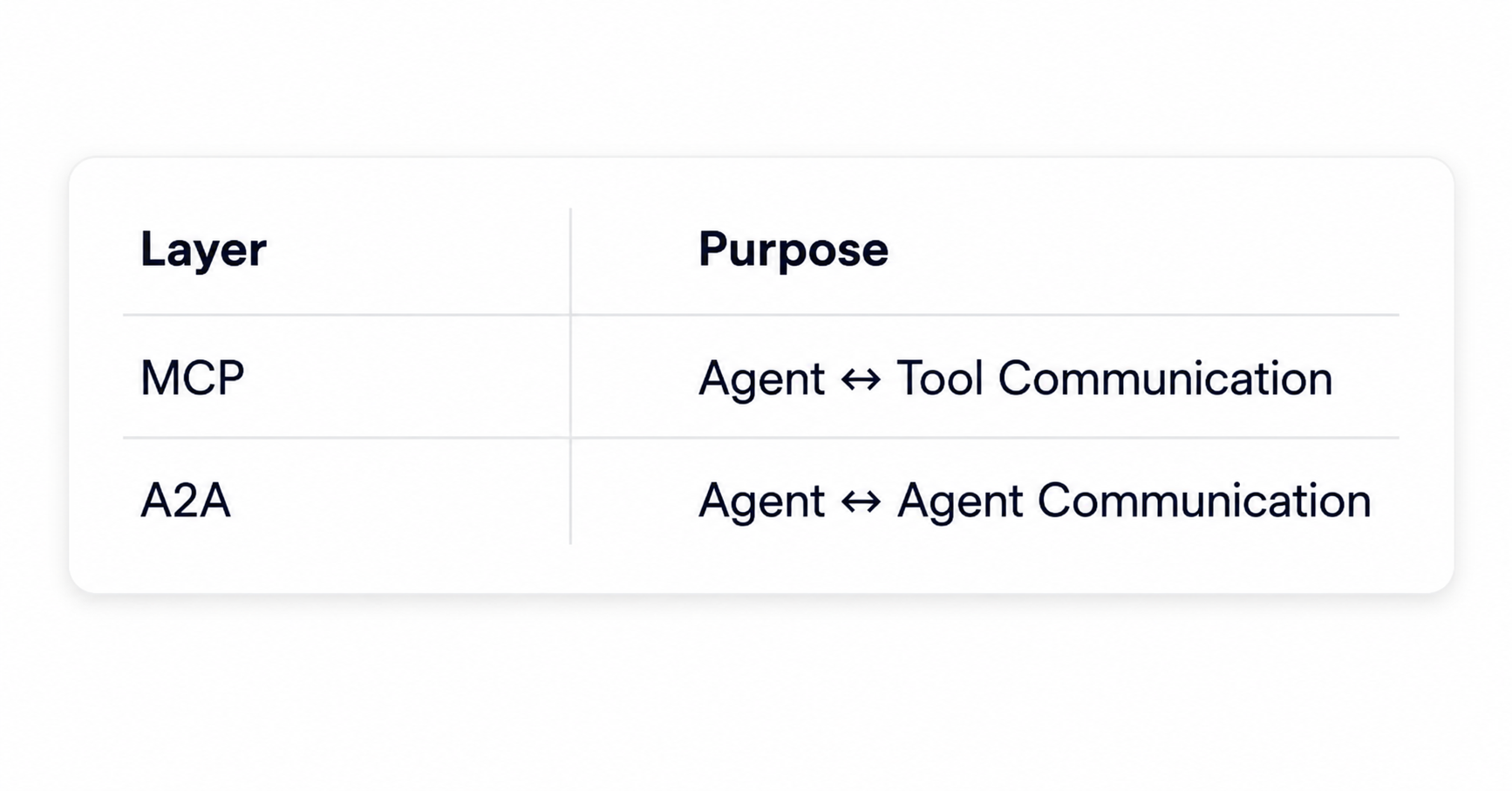
Combined, they create the foundation for multi-agent enterprise systems.
But even together, they do not solve the most important enterprise requirement.
The Missing Layer: Enterprise Reasoning
A connected agent is not the same as a trusted enterprise process.
The real challenge is:
Governable Reasoning
Can an organization:
- Decompose business goals across multiple agents?
- Maintain context throughout the process?
- Track every decision?
- Enforce policies?
- Audit outcomes?
- Explain failures?
This is where most enterprise AI architectures remain immature.
A Useful Comparison
APIs transformed software.
MCP may transform AI.
Neither solves enterprise reasoning.
Connectivity is necessary.
It is not sufficient.
The New Enterprise Risk Surface
Multi-agent systems introduce a new category of risk.
The Trust Problem
Many emerging architectures allow agents to advertise their capabilities through metadata.
Orchestrators then decide which agents receive work.
The challenge:
An agent can misrepresent itself.
A malicious or compromised agent may:
- Overstate capabilities
- Manipulate routing decisions
- Interfere with workflows
- Gain access to sensitive processes
The result is a new attack surface operating above the application layer.
Why This Matters
In a multi-vendor environment:
The question is no longer:
Can agents communicate?
The question becomes:
Can agents trust each other?
Governance Is Becoming Its Own Architecture Layer
Leading enterprises are increasingly separating:
- Agent execution
- Agent orchestration
- Governance
- Policy enforcement
- Auditability
Into distinct architectural components.
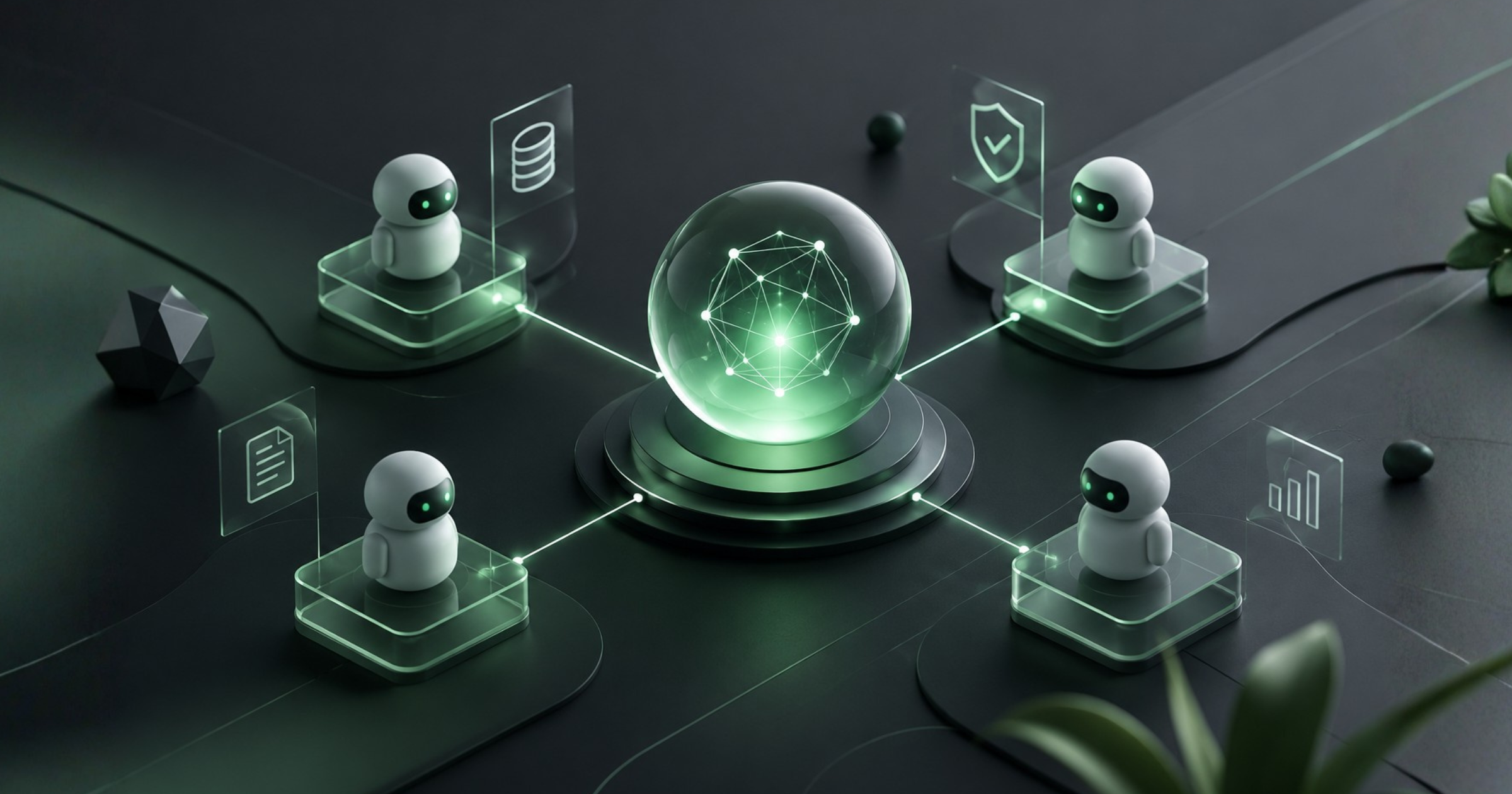
This is sometimes described as an Agentic Mesh:
A coordinated network of agents, tools, and systems operating under shared governance.
Core Capabilities
A production-ready architecture requires:
Governed Actions
Every action is policy-checked before execution.
Trusted Data
Clear ownership, lineage, and reliability.
Embedded Controls
Security and compliance integrated into workflows.
Governed Autonomy
Agents operate within defined limits rather than unrestricted discretion.
Why Most Enterprise AI Pilots Still Stall
The common assumption:
Models aren't capable enough yet.
The evidence suggests otherwise.
The Real Bottlenecks
Most stalled deployments struggle with:
- Governance
- Integration complexity
- Evaluation frameworks
- Security requirements
- Compliance controls
Not model intelligence.
What the Data Shows
Only a small percentage of enterprise agent pilots reach meaningful production scale.
The primary reasons include:
- Lack of governance maturity
- Inadequate oversight
- Poor auditability
- Integration challenges
Capability is advancing faster than control.
That mismatch is where many initiatives fail.
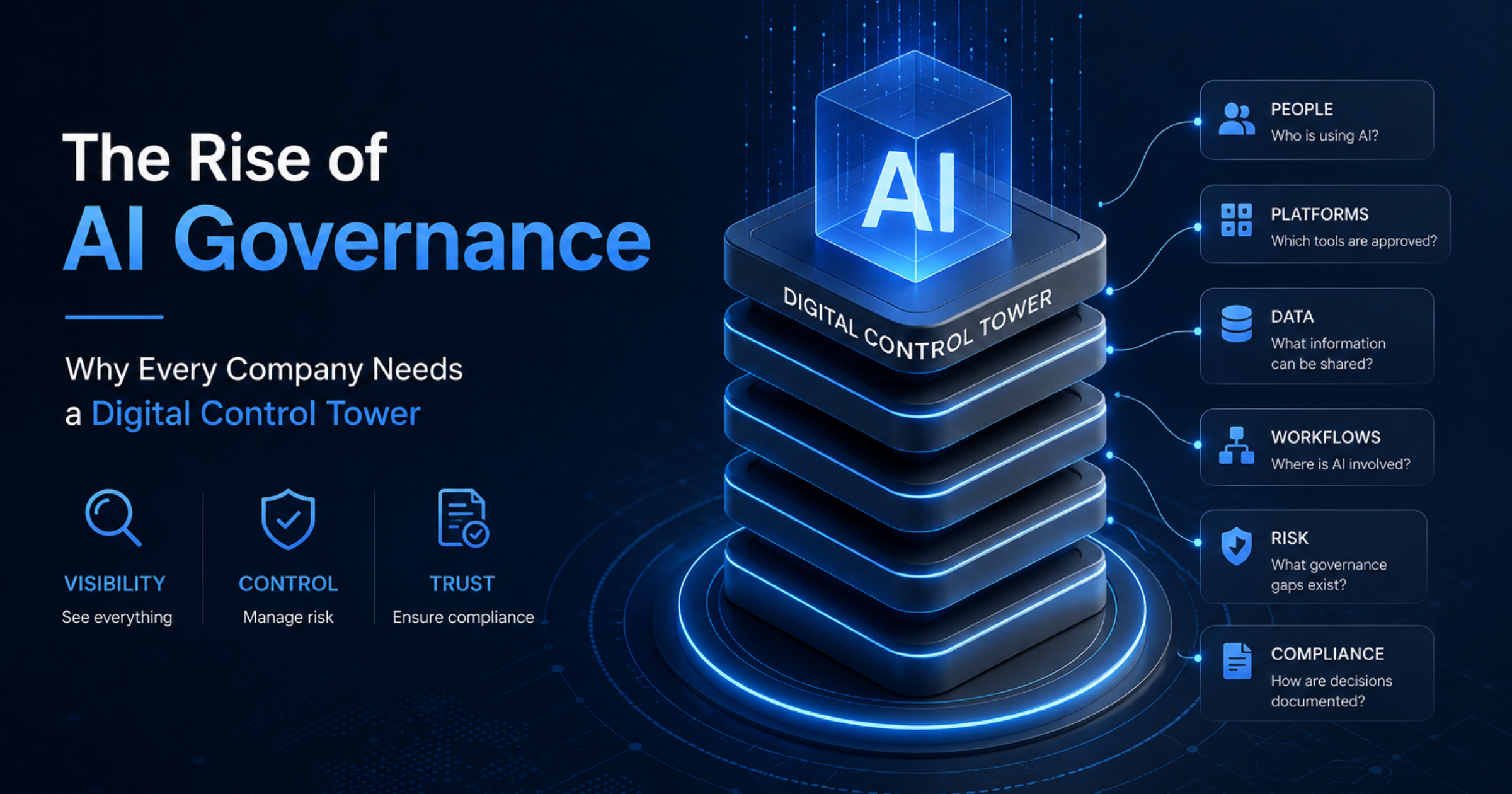
The Rise of the AI Control Plane
A new infrastructure category is emerging directly from this problem.
Enterprise MCP Gateways
These platforms sit between agents and enterprise systems.
Their role is not connectivity.
Their role is control.
What They Provide
Identity-Based Access Control
Who can access what.
Policy Enforcement
What actions are allowed.
Audit Trails
Who did what, when, and why.
Centralized Governance
A single layer for oversight across multiple agents and systems.
For regulated industries, these capabilities are rapidly becoming mandatory rather than optional.
Follow the Capital
One of the strongest indicators of where the market is heading is investment activity.
Funding is increasingly moving away from:
- Novel agent experiences
- Standalone AI assistants
- Model-centric differentiation
And toward:
- Agent infrastructure
- Security
- Identity
- Observability
- Governance
- Orchestration
Investors are asking a different question now:
Not:
Can the agent act?
But:
Can the agent act safely, repeatedly, and inside real enterprise systems?
What Leaders Should Do Next
1. Evaluate Governance Before Models
Model quality is becoming increasingly commoditized.
The bigger differentiator is:
- Policy enforcement
- Auditability
- Orchestration
- Security
Ask vendors how decisions are governed-not just which model they use.
2. Verify Cross-Agent Trust
If multiple agents will collaborate:
Ask how identities are verified.
Do not rely solely on capability descriptions.
Trust must be cryptographic, not declarative.
3. Build Governance Before Scale
The most successful enterprise deployments share a common pattern:
They established governance infrastructure before expanding deployment.
Not after.
Governance is not a scaling phase.
It is a prerequisite for scaling.
The Strategic Takeaway
MCP solved a foundational problem:
How AI systems connect to enterprise tools and data.
The next challenge is much larger:
How multiple agents coordinate, reason, and operate within enterprise processes in a way organizations can trust.
That layer is still being built.
It is where standards are emerging.
It is where investment is flowing.
And increasingly, it is where competitive advantage will be created.
The next enterprise AI architecture decision is no longer about connectivity.
It's about governable reasoning at scale.